
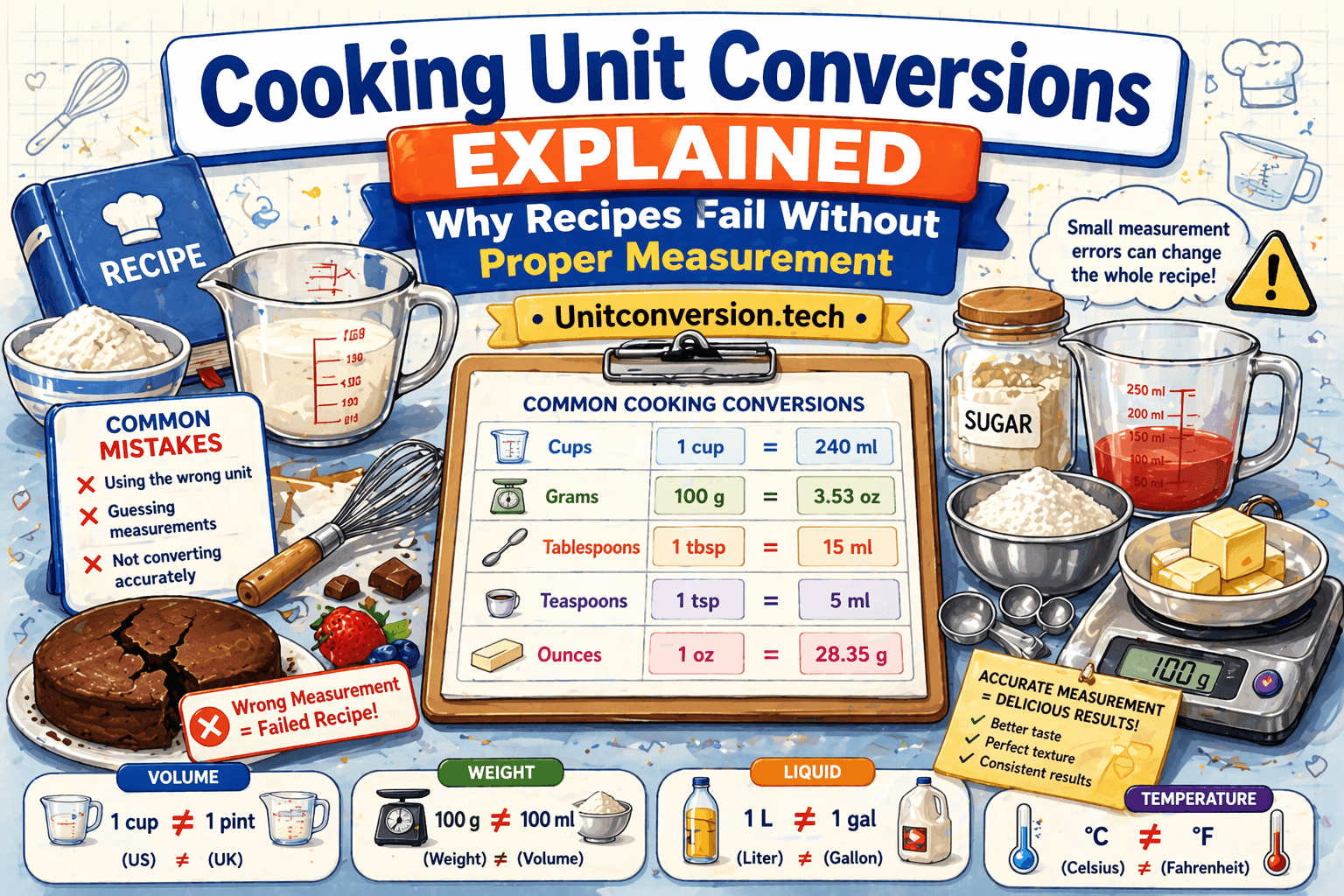
Cooking is often seen as an art but it’s also a science and cooking unit conversions plays an important role in this. Like any science, it depends heavily on accurate measurements. One of the most common reasons recipes fails is not bad ingredients or poor technique, it’s incorrect unit conversion. Whether you’re following an international recipe or scaling ingredients, even a small mistake in units can completely change the outcome of a dish.
🧂 Why Measurements Matter in Cooking
Every ingredient in a recipe has a specific role. Professional culinary standards often follow precise measurement guidelines from organizations like USDA Food Data Central.
- Flour provides structure
- Sugar adds sweetness and texture
- Liquids control consistency
If the measurements are off, the balance breaks.
👉 Cooking might allow some flexibility but baking especially requires precision and rounding accuracy.
🌍 The Problem: Different Measurement Systems
Recipes around the world use different units:
😕 What goes wrong:
A recipe written in grams may be followed using cups without proper conversion.
👉 Result:
- Too much or too little of an ingredient
- Texture and taste get affected
🥄 Volume vs Weight Confusion
One of the biggest mistakes in cooking is mixing up volume and weight.
Example: 1 cup of flour ≠ 1 cup of sugar (by weight) – This is a classic example of confusion between volume and weight conversions.
Why? → Different ingredients have different densities which is why understanding volume conversion guide is essential.
👉 So converting directly without understanding this leads to:
- Dry cakes
- Dense bread
- Runny batter
🔥 Small Errors, Big Impact
Cooking mistakes from wrong conversions may seem small but they add up.
❌ Common issues:
- Too much baking powder → bitter taste
- Too little flour → weak structure
- Extra liquid → soggy texture
👉 Especially in baking, even a 5-10% difference can ruin the result. This is where precision in measurement becomes critical.
🍰 Baking vs Cooking: Why Precision Changes Everything
In general cooking:
✔ You can adjust ingredients
✔ Taste and fix as you go
In baking:
❌ No room for guesswork
✔ Exact measurements are critical
That’s why unit conversion matters even more when:
- Baking cakes
- Making bread
- Preparing desserts
🧠 Why These Mistakes Happen
1. Assumptions
People assume units are interchangeable.
2. Lack of Conversion Knowledge
Not everyone understands how unit conversion works properly.
3. Using Wrong Tools
Using a cup instead of a kitchen scale.
4. Ignoring Recipe Origin
Different countries use different standards.
✅ How to Avoid Cooking Conversion Mistakes
Here’s how you can get it right every time:
✔ Use a Kitchen Scale
👉 Most accurate way to measure ingredients
👉 Especially useful for baking
✔ Follow the Original Unit System
If the recipe uses grams → stick to grams
✔ Understand Key Conversions
These are essential cooking unit conversions every beginner should know.
- 1 cup ≈ 240 ml
- 1 tablespoon ≈ 15 ml
- 1 teaspoon ≈ 5 ml
👉 But remember: These are volume, not weight.
✔ Use Reliable Conversion Tools
Online tools help convert accurately without guesswork.
✔ Pay Attention to Ingredient Type
Flour, sugar, butter, all behave differently.
📊 Quick Tip for Better Results
When possible: 👉 Prefer weight (grams) over volume (cups) because weight-based measurement aligns better with the metric system.
And why?
- More accurate
- Less variation
- Consistent results
📌 Final Thoughts
Cooking failures are often blamed on skill but in many cases, the real issue is incorrect measurement.
Understanding unit conversion helps you:
✔ Follow any recipe from anywhere in the world
✔ Avoid wasted ingredients
✔ Improve consistency in results
At the end of the day: 👉 Good cooking starts with accurate measurement.
🔗 Related Guides
📌 Key Takeaways
- Cooking recipes often fail due to incorrect unit conversions rather than poor technique.
- Different countries use different measurement systems like metric and imperial units.
- Mixing volume (cups) and weight (grams) can lead to inaccurate ingredient measurements.
- Small conversion errors can significantly affect taste, texture, and consistency.
- Baking requires precise measurements, making accurate conversion even more important.
- Using a kitchen scale improves accuracy and consistency in cooking results.
- Understanding unit conversion helps you follow international recipes successfully.