
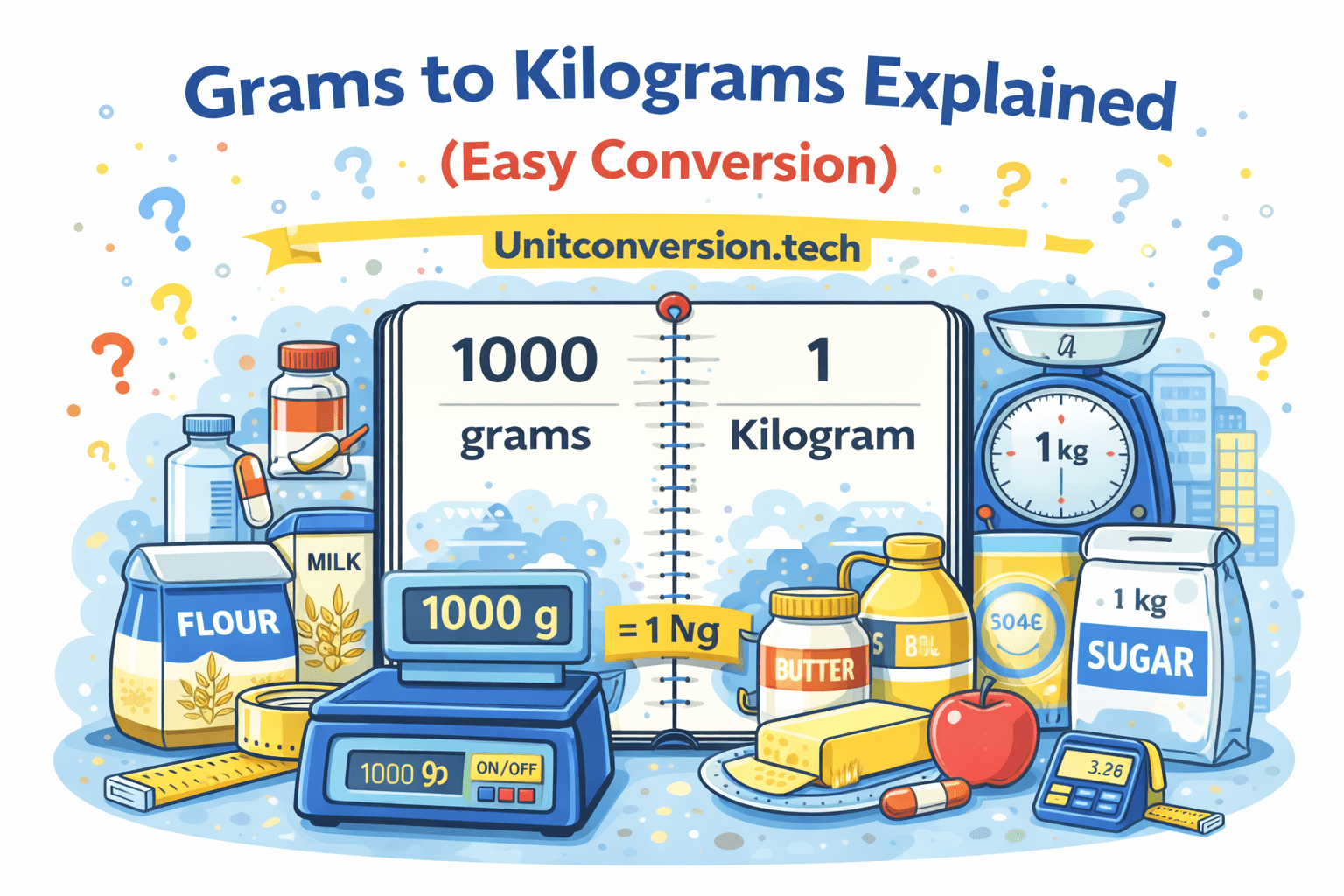
Grams to kilograms is one of the simplest and most important conversions in the metric system. Since both units are part of the same system, converting between them is much easier compared to other measurements, especially when you understand the basics of unit conversion. This guide will help you understand the relationship, convert quickly, and use it in real-life situations.
⚖️ Grams vs Kilograms: What’s the Difference?
Both grams and kilograms measure weight (mass), but they differ in scale:
- Gram (g) → smaller unit
- Kilogram (kg) → larger unit
Both units are part of the globally used metric system, which is designed for simple base-10 conversions.
👉 The key relationship:
- 1 kilogram = 1000 grams
This means kilograms are just a larger grouping of grams.
🧠 Unique Angle: Think in “1000s” (Super Easy Method)
Instead of memorizing formulas, just remember:
👉 1000 grams = 1 kilogram
- 2000 g = 2 kg
- 500 g = 0.5 kg
👉 You’re simply moving between units of 1000. This simplicity is why metric units are preferred for accurate and consistent measurements.
🔢 Quick Conversion Methods
You don’t need complex math:
- Grams → Kilograms: divide by 1000
- Kilograms → Grams: multiply by 1000
Try These:
- 1000 g → 1 kg
- 2500 g → 2.5 kg
- 0.5 kg → 500 g
For instant & error-free results, you can also use a conversion calculator instead of manual calculations.
🍎 Real-Life Examples (Everyday Use)
This conversion is used in daily life more than you think:
- Grocery items: 500 g of vegetables = 0.5 kg
- Gym weights: 1000 g = 1 kg
- Cooking ingredients: 250 g flour = 0.25 kg
👉 Most packaging uses both units, so understanding this helps instantly.
🧾 Understanding Labels and Packaging
You’ll often see both grams and kilograms mentioned on product packaging:
- “500 g (0.5 kg)”
This helps users understand weight in both small and large units. This standardization of unit ensures consistency across countries and industries.
👉 In grocery stores, smaller items are usually labeled in grams, while larger quantities are shown in kilograms.
⚡ Quick Estimation Trick
- Half kg = 500 g
- Quarter kg = 250 g
This makes quick mental conversions very easy while shopping or cooking.
⚠️ Common Mistake
👉 Forgetting the base unit (1000) ❌
Some people assume: 1 kg = 100 g (incorrect) but always remember: 1 kg = 1000 g
Mistakes like this are common when switching between different measurement systems.
📊 Quick Reference Conversion Table
Here’s a simple table you can remember:
- 100 g = 0.1 kg
- 250 g = 0.25 kg
- 500 g = 0.5 kg
- 750 g = 0.75 kg
- 1000 g = 1 kg
👉 These are the most commonly used values in daily life.
🎯 Why This Matters
Understanding grams to kilograms helps in:
- Cooking and recipes
- Grocery shopping
- Fitness tracking
- Academic learning
It also forms the foundation for understanding more complex conversions used in science and engineering.
✅ Conclusion
Grams and kilograms are part of the same metric system, making conversion simple and straightforward. Once you understand the “1000 rule,” switching between them becomes quick and effortless in everyday situations.
🔗 Related Guides
📌 Key Takeaways
- 1 kilogram equals 1000 grams.
- Divide grams by 1000 to convert to kilograms.
- Multiply kilograms by 1000 to convert to grams.
- This conversion is commonly used in cooking, shopping, and fitness.
- Thinking in multiples of 1000 makes conversion quick and easy.