
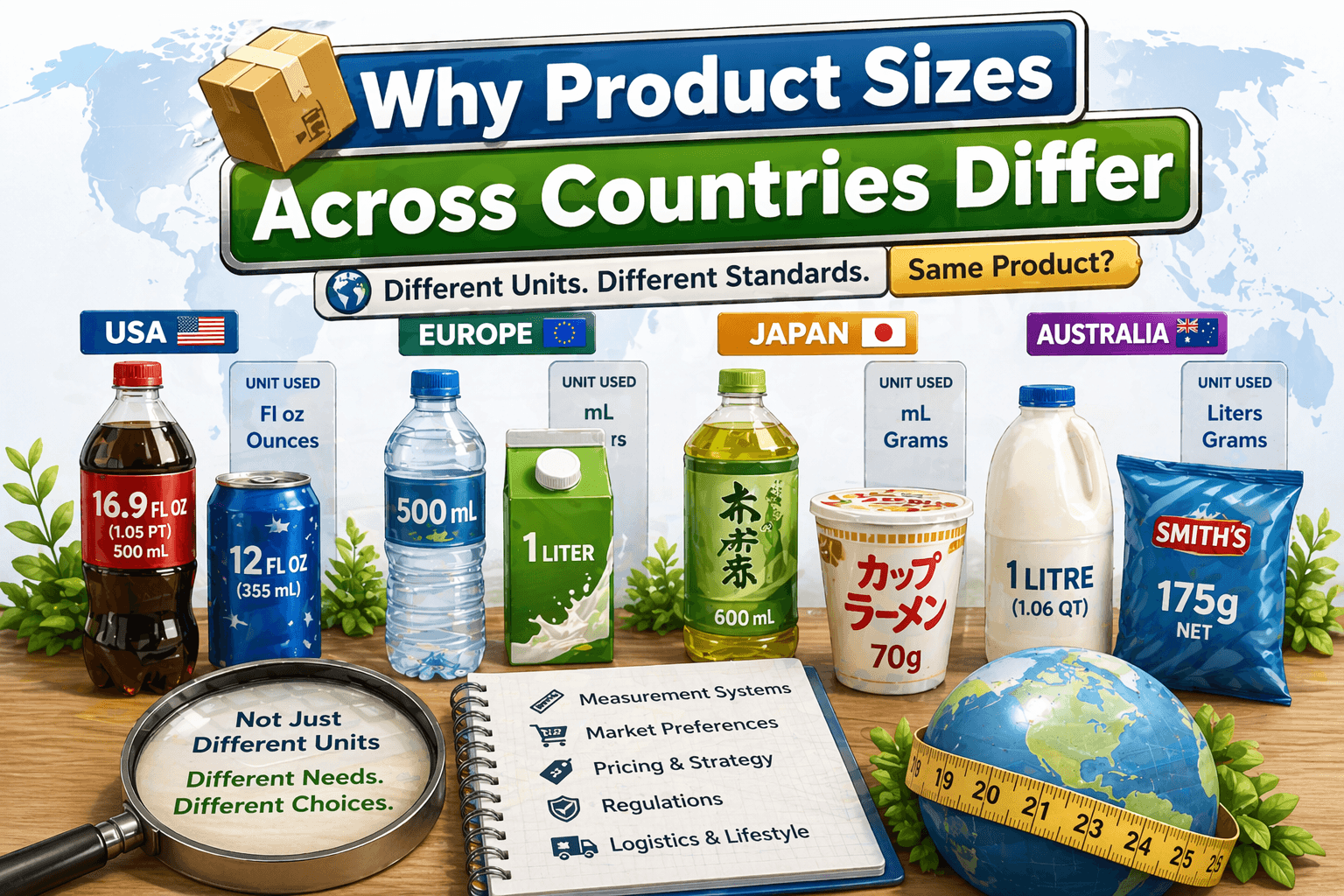
Have you ever bought a product abroad and noticed the size felt completely different? A “large” drink might seem small, or a pack of snacks might contain less than expected. This confusion is common when comparing product sizes across countries, where differences go beyond simple unit conversion. From measurement systems to cultural preferences and regulations, several factors influence how products are sized and packaged around the world.
🌍 Different Measurement Systems
One of the main reasons product sizes differ is the use of different measurement systems.
- Metric system → grams, liters, centimeters
- Imperial system → ounces, gallons, inches
😕 What this means:
A product labeled as “500 ml” in one country might be compared to “16 oz” in another but they are not exactly the same.
👉 This creates confusion when:
💠Estimating value for money
💠Comparing products
💠Understanding quantity
🏪 Local Market Preferences
Companies adjust product sizes based on what customers prefer in each country.
Example:
- In some countries → smaller, affordable packs are popular which often rely on standardized measurement units
- In others → larger, bulk packaging is preferred
👉 This depends on:
- Buying habits
- Storage space
- Daily consumption patterns
💰 Pricing and Marketing Strategies
Product sizing is often influenced by pricing strategies.
✔ Smaller packs:
- Lower price point
- Attract budget-conscious buyers
✔ Larger packs:
- Offer “better value” perception
- Target bulk buyers
👉 Companies design sizes to match local purchasing power & competition.
📏 Regulations and Packaging Laws
Different countries have different rules for packaging and labeling. These rules are often guided by organizations like the International Organization for Standardization (ISO).
These may include:
- Standard unit requirements (grams, liters)
- Labeling accuracy rules
- Minimum or maximum size limits
👉 Manufacturers must adjust product sizes to comply with local laws.
🚚 Transportation and Logistics
Shipping and storage also affect product sizing.
Why it matters:
- Larger packages may increase transport cost
- Smaller units may be easier to distribute
👉 Companies optimize packaging to reduce:
- Shipping expenses
- Storage issues
- Damage risks
🍔 Cultural and Lifestyle Differences
Lifestyle plays a big role in how products are sized.
Example:
- Fast-paced cities → smaller, convenient packs
- Family-oriented regions → larger packaging
Food & beverage sizes especially vary depending on:
- Eating habits
- Portion expectations
- Health awareness
⚖️ Unit Conversion vs Actual Size Difference
Sometimes the difference is just in units but sometimes it’s real.
Example:
- 1 liter ≈ 33.8 ounces
- But a “1-liter bottle” and a “32 oz bottle” are not equal
- Some differences are due to conversion
- Others are intentional design choices
🧠 Why This Confuses Consumers
People get confused because:
1. Familiar Labels
They expect sizes to match what they know.
2. Assumptions
They assume “large” or “medium” means the same everywhere.
3. Hidden Differences
Packaging may look similar but contain different quantities often caused by measurement system variations.
✅ How to Avoid Confusion
Here are simple tips to stay informed:
✔ Check the Actual Quantity
Always look at:
- Weight (g, kg)
- Volume (ml, L)
✔ Compare Unit Prices
Check price to understand true value:
- 100 grams
- 1 liter
✔ Learn Basic Conversions
Knowing simple conversions makes comparison easier.
✔ Don’t Rely on Labels Like “Small” or “Large”
These terms are not standardized globally.
📊 Real-World Example
A soda bottle labeled:
- 500 ml in one country
- 16.9 oz in another
👉 These are almost the same but not exactly.
Now compare: 1 liter vs 32 oz
👉 These are noticeably different.
📌 Final Thoughts
Product size differences across countries are not random; they are shaped by systems, culture, economics, and logistics.
Understanding these differences through unit conversion basics helps you:
✔ Make better purchasing decisions
✔ Avoid confusion
✔ Compare products more accurately
At the end of the day: It’s not just about size – it’s about understanding what you’re really getting.
🔗 Related Guides
📌 Key Takeaways
- Product sizes differ across countries due to measurement systems, regulations, and market preferences.
- Metric and imperial systems can make similar products appear different in size.
- Companies adjust packaging sizes based on local buying habits and pricing strategies.
- Government regulations and labeling laws influence how products are packaged and sold.
- Transportation and logistics also play a role in determining product size and packaging.
- Labels like “small” or “large” are not standardized and can vary widely by country.
- Checking actual weight, volume, and unit price helps consumers make better comparisons.