
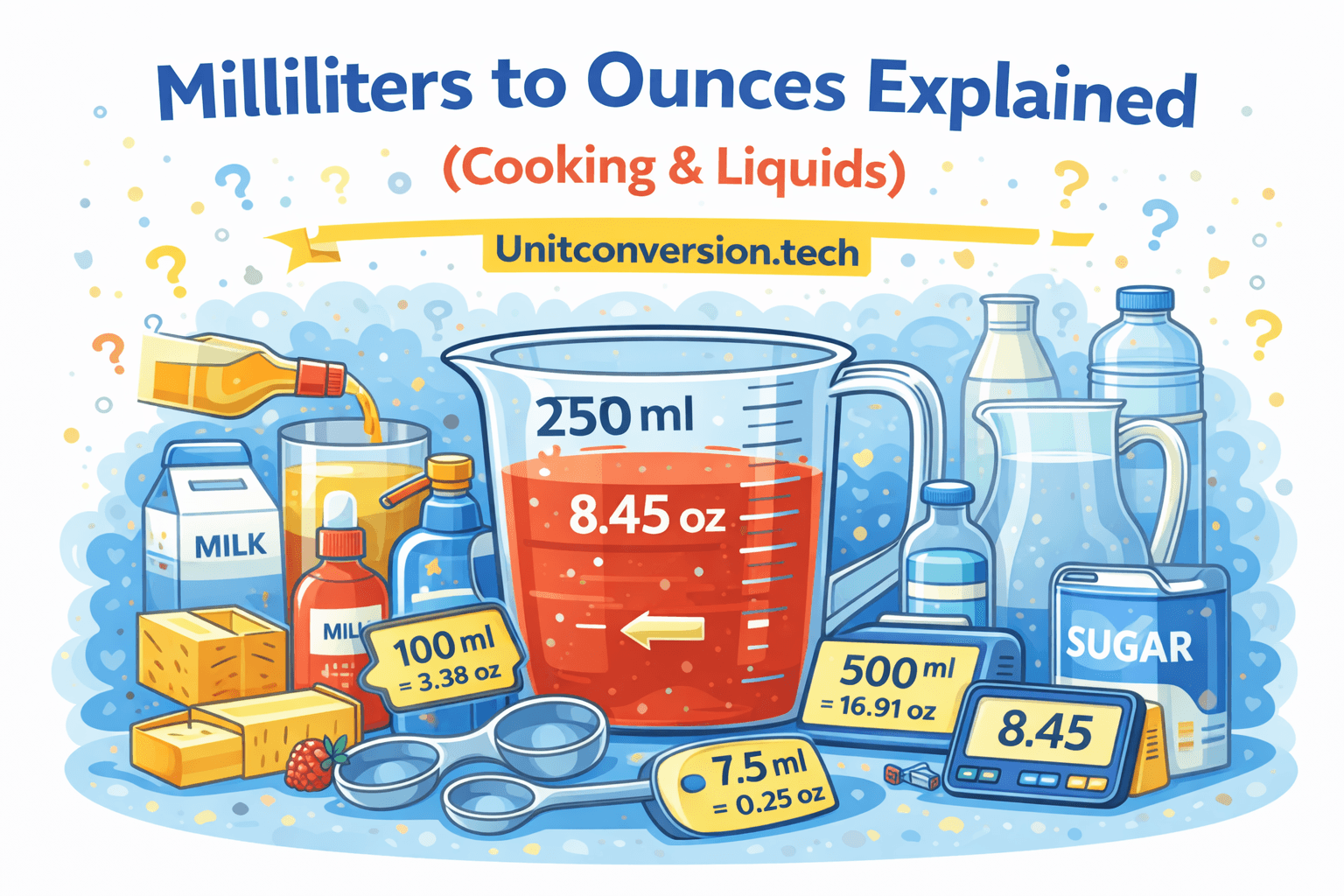
Milliliters to ounces is a common conversion used when measuring liquids, especially in cooking, baking, and beverages. Since different countries use different measurement systems, recipes often list ingredients in either milliliters (mL) or fluid ounces (fl oz). Understanding how to convert between these units helps you follow recipes accurately and avoid measurement mistakes. If you’re new to conversions, it helps to first understand the basics of how unit conversion works across different systems.
🍳 Ever Followed a Recipe and Got Confused?
You’re in the kitchen, following an online recipe. It says: “Add 8 oz of milk” but your measuring cup only shows milliliters. Now you’re stuck converting instead of cooking. That’s exactly where understanding milliliters to fluid ounces becomes useful.
🧪 First, What Are We Measuring?
Both units measure liquid volume, but they come from different systems:
- Milliliters (mL) → Metric system (used in most countries)
- Ounces (fl oz) → US system (used in recipes, packaging)
👉 Important: These are fluid ounces, not weight ounces. These units are part of different global measurement systems, which is why recipes can vary depending on the country.
🧠 The One Number You Actually Need
Forget everything else. Just remember this:
👉 1 ounce ≈ 30 milliliters
This rounded value works well for cooking, but more precise conversions use exact SI-based measurements. Check yourself any numbers using our free volume unit conversion tool.
🍶 Think Like a Cook (Practical Method)
Instead of converting every time, think in common kitchen quantities:
- 1 oz → ~30 mL
- 2 oz → ~60 mL
- 4 oz → ~120 mL
- 8 oz → ~240 mL (1 cup)
👉 Once you see this a few times, you’ll stop converting – you’ll just know it. This kind of mental estimation is helpful in the kitchen, but for accurate measurements & proper rounding numbers plays an important role.
🥄 Real-Life Kitchen Examples
Let’s make this real:
- Coffee recipe: 240 mL water ≈ 8 oz
- Milk measurement: 100 mL ≈ 3.4 oz
- Oil for cooking: 30 mL ≈ 1 oz
👉 These are the exact situations where this conversion matters. Similar conversions are also used when measuring larger liquid quantities like liters and gallons. Learn in more detail about the rules and pattern on our free guide on volume conversion.
⚡ Quick Estimation Trick
No calculator? No problem.
👉 Just divide milliliters by 30
- 150 mL → ~5 oz
- 300 mL → ~10 oz
👉 Fast and good enough while cooking. Just remember that estimation is useful for speed, but baking and professional cooking often require precise values.
⚠️ One Mistake That Ruins Recipes
👉 Mixing up ounces (oz) with fluid ounces (fl oz) ❌
- oz = weight
- fl oz = liquid volume
👉 In cooking, always use fluid ounces. This unit confusion between weight & volume is one of the most common conversion mistakes beginners make.
🎯 Why This Conversion Matters
You’ll use this when:
- Following international recipes
- Measuring liquids accurately
- Using imported kitchen tools
- Baking (where precision matters)
These kinds of conversions are also essential in food science, nutrition, and even industrial or science processes involving liquids.
✅ Conclusion
Milliliters and ounces measure the same thing but use different systems. Once you remember that 1 ounce is roughly 30 milliliters, you can confidently follow any recipe without stopping to calculate, whether you’re working with metric or US measurement systems. Understanding these everyday conversions also makes it easier to switch between different unit systems globally.
🔗 Related Guides
📌 Key Takeaways
- 1 ounce is approximately equal to 30 milliliters.
- Milliliters are metric, while ounces are used mainly in the US.
- Divide milliliters by 30 for quick conversion to ounces.
- Always use fluid ounces (fl oz) for liquids.
- This conversion is essential for cooking and recipes.