
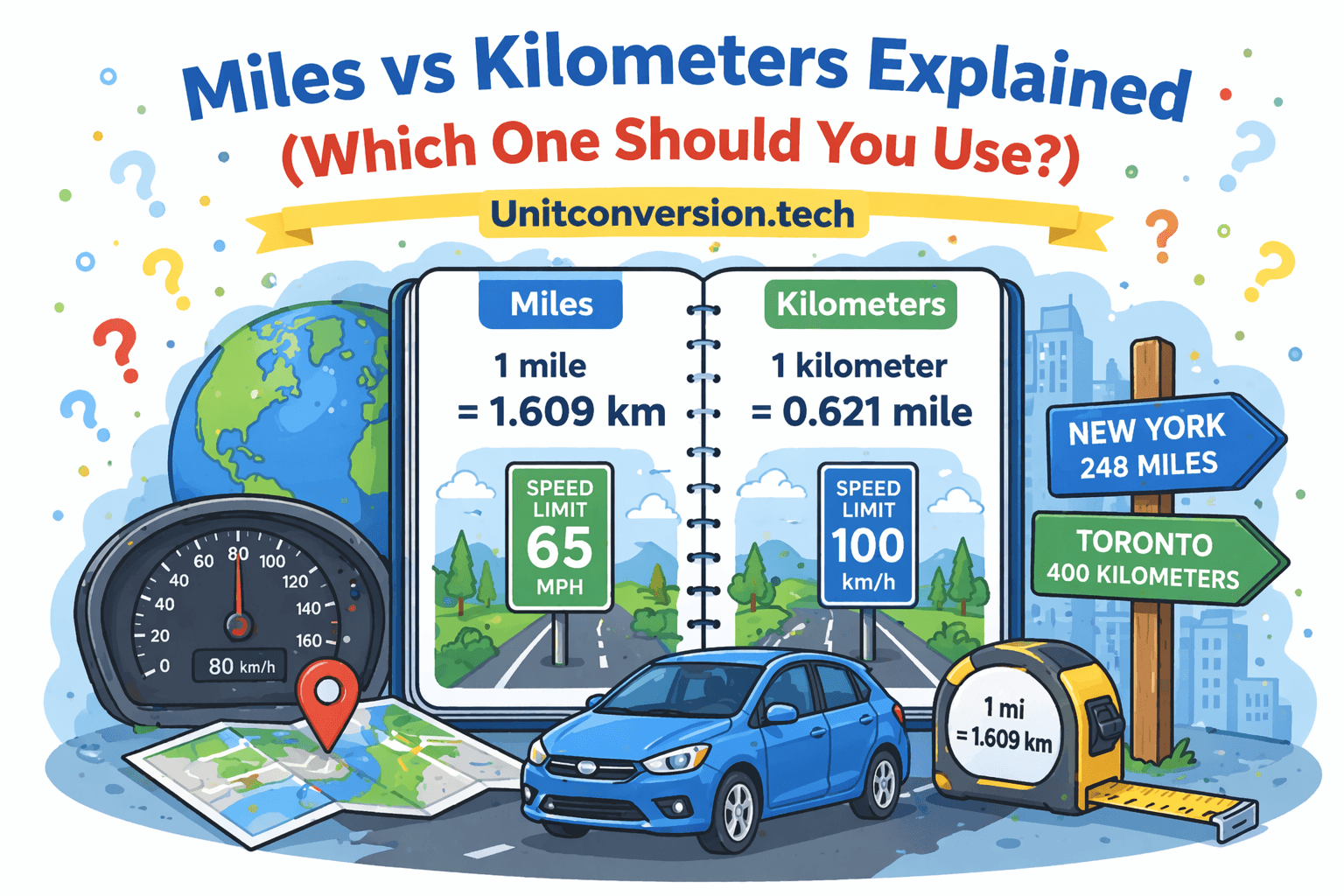
Miles vs kilometers is one of the most common distance comparisons, especially when traveling or using maps from different countries. Since different regions follow different measurement systems like metric and imperial, it’s easy to get confused when switching between them (explained clearly in Imperial vs Metric System).
🚗 Miles vs Kilometers: The Core Difference
Miles and kilometers both measure distance, but they belong to different systems:
- Miles (mi) → Used mainly in the United States and the UK
- Kilometers (km) → Used in most countries worldwide
👉 The key difference is their size:
- 1 mile = 1.609 kilometers
This means a mile is longer than a kilometer. This difference is the main reason distances can feel very different depending on which unit is used.
🧠 Unique Angle: Why Miles Feel “Longer”
Here’s something interesting:
👉 If someone says “10 miles” vs “10 kilometers”
- 10 miles = 16 km
- 10 km = 6.2 miles
👉 Miles feel longer because they actually are longer units. This is why distances in the US often sound bigger.
🔢 Quick Conversion (Without Stress)
Instead of remembering complex math, use this:
- Miles → Kilometers: multiply by 1.6
- Kilometers → Miles: divide by 1.6
Examples:
- 5 miles → 8 km
- 10 miles → 16 km
- 20 km → 12.5 miles
👉 Simple and good enough for daily use. Instantly convert miles to kilometers or vice versa using our free conversion tool.
🌍 Where You’ll See Each
Understanding usage helps more than formulas:
- Kilometers
- Road signs (India, Europe, most countries)
- Running distances (5K, 10K races)
- Miles
- US road distances
- Speed limits (mph – miles per hour)
👉 This is why travelers often get confused. It’s one of the most common challenges when navigating or reading maps in a new country. Get clarity on Travel unit conversions in this free guide.
📏 Real-Life Distance Examples
Let’s make it practical:
- Short walk:
- 1 km ≈ 0.6 miles
- City distance:
- 10 km ≈ 6.2 miles
- Long travel:
- 100 km ≈ 62 miles
These help you “feel” the distance without calculating. Over time, these reference points make it easier to estimate distances instantly.
⚠️ Common Mistake
👉 Assuming: 1 mile ≈ 1 km ❌
This leads to big errors and even small misunderstandings can affect travel time, fuel planning, or fitness tracking.
Always remember: 1 mile ≈ 1.6 km
🎯 Why This Matters
You’ll use this conversion in:
- Travel and navigation
- Fitness tracking (running/walking)
- Maps and GPS
- Understanding speed (km/h vs mph)
Since speed is directly linked to distance, understanding this speed conversion also helps interpret speed limits correctly.
✅ Conclusion
Miles and kilometers measure the same thing but differ in size and usage across regions. Once you understand that a mile is longer and apply the simple 1.6 rule, converting between them becomes quick and intuitive. With a little practice, this becomes a practical unit conversion skill you’ll use in everyday situations.
🔗 Related Guides
📌 Key Takeaways
- 1 mile equals approximately 1.609 kilometers.
- Miles are longer than kilometers, which is why distances seem bigger.
- Multiply miles by 1.6 to convert to kilometers.
- Divide kilometers by 1.6 to convert to miles.
- Kilometers are used globally, while miles are mainly used in the US and UK.