
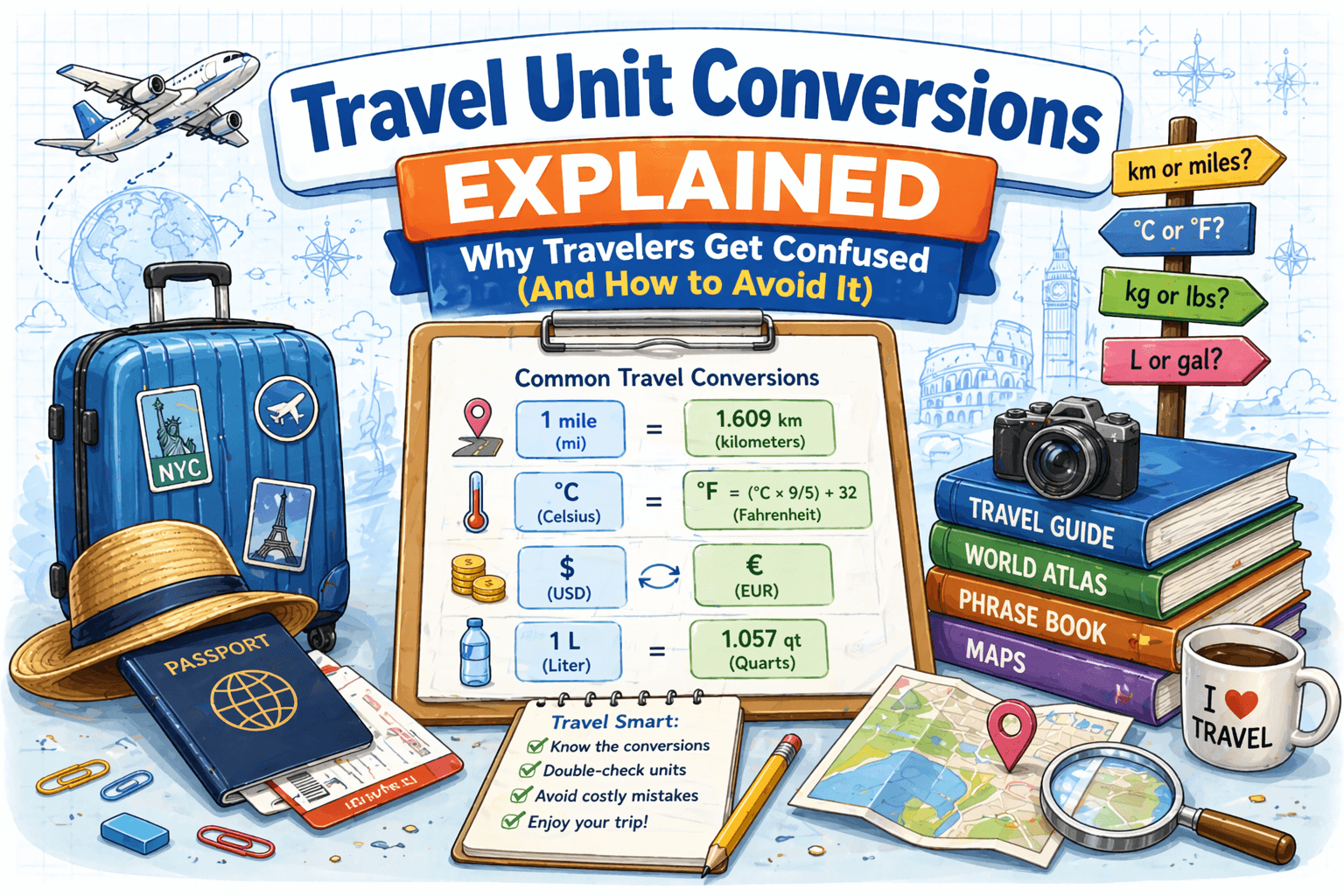
Traveling to a new country is exciting, but it can also be confusing especially when it comes to travel unit conversions. From road signs and weather forecasts to food portions and fuel prices, different countries use different measurement systems. Understanding what unit conversion is can make these differences much easier to handle. What may seem like a small difference in Miles vs Kilometers or Celsius vs Fahrenheit can quickly turn into real confusion when you’re navigating unfamiliar places. In this guide, you’ll learn why these differences cause problems for travelers and how to avoid common mistakes.
🌍 Why Unit Confusion Happens While Traveling
The main reason travelers struggle is simple: 👉 Not all countries use the same measurement system.
Most of the world uses the metric system, while a few countries (like the United States) still rely heavily on the imperial system.
This means travelers constantly face differences like:
When you’re already dealing with a new language and environment, these differences can become overwhelming.
🚗 Distance & Speed Confusion
One of the most common issues travelers’ faces is understanding distance and speed.
- In most countries → distances are in kilometers (km)
- In the US → distances are in miles
Guides with detail about Miles vs Kilometers and Km/h to Mph.
😕 What goes wrong:
A traveler might assume:
- 100 km ≈ 100 miles (which is incorrect)
💡 Reality:
- 100 km ≈ 62 miles
This can affect:
- Travel time planning
- Fuel estimation
- Navigation decisions
🌡️ Temperature Confusion
Weather can feel completely different when you don’t understand the unit.
- Most countries → Celsius (°C)
- US → Fahrenheit (°F)
Guide for more understanding on Celsius & Fahrenheit.
😕 Example:
- 30°C → warm day
- 30°F → freezing temperature
👉 A simple misunderstanding can lead to:
- Overpacking or underpacking
- Being unprepared for weather conditions
⛽ Fuel & Liquid Measurements
Fuel pricing and quantities can confuse many travelers.
- Metric countries → liters
- US → gallons
Guide explaining the difference between Liters & Gallons.
😕 Common confusion:
Seeing fuel priced per liter might seem expensive but it’s not directly comparable to gallons.
👉 This affects:
- Budget planning
- Fuel cost expectations
⚖️ Weight & Luggage Issues
Airlines use different units for baggage limits.
- Metric → kilograms (kg)
- Imperial → pounds (lbs)
Guide for the quick understanding on Kg & Pounds.
😕 What happens:
- Travelers’ mis-judge luggage weight
- End up paying extra baggage fees
👉 Example: 20 kg ≠ 20 lbs (it’s about 44 lbs)
🍽️ Food Portions & Cooking
Even ordering food can be confusing.
- Drinks in milliliters vs ounces
- Food weight in grams vs pounds
This becomes more noticeable when:
- Following recipes
- Ordering specific quantities
🧠 Why These Mistakes Are Common
Travelers face unit confusion because:
1. Habit
You’re used to one system in daily life.
2. Assumptions
You assume numbers mean the same across countries.
3. Lack of Quick Conversion
Not everyone remembers conversion formulas. Learning basic unit conversion concepts can reduce this confusion significantly.
✅ How to Avoid Unit Confusion While Traveling
Here are simple ways to stay ahead:
✔ Learn Basic Conversions
These are part of essential travel unit conversions every traveler should know. You don’t need everything, just key ones:
- 1 mile ≈ 1.6 km
- 1 kg ≈ 2.2 lbs
- 1 liter ≈ 0.26 gallons
✔ Use Your Smartphone
Apps and Google can instantly convert units. Or you can use reliable unit conversion tools for quick results.
👉 Example: “100 km to miles” → instant answer
✔ Pay Attention to Labels
Always check units on:
- Road signs
- Fuel stations
- Menus
- Weather apps
✔ Think in Ranges, Not Exact Numbers
You don’t need perfect accuracy, just rough understanding.
✔ Prepare Before Traveling
Spend a few minutes learning the system used in your destination country.
🌟 Real-World Tip
Most modern tools (GPS, smartphones, smartwatches) allow you to switch units. 👉 Set your preferred unit system before traveling to reduce confusion.
📌 Final Thoughts
Unit confusion is one of those small travel challenges that can quickly become frustrating but it’s also one of the easiest to fix.
With a little awareness and preparation, you can:
✔ Travel more confidently
✔ Avoid mistakes
✔ Make better decisions on the go
At the end of the day:
👉 Understanding units is not just about numbers, it’s about navigating the world smoothly.
🔗 Related Guides
📌 Key Takeaways
- Travelers often get confused because different countries use different measurement systems.
- Common differences include kilometers vs miles, Celsius vs Fahrenheit, and liters vs gallons.
- Unit confusion can affect travel planning, budgeting, and daily decisions.
- Even small misunderstandings can lead to incorrect travel time, weather preparation, or costs.
- Learning a few basic conversions can significantly reduce confusion.
- Using smartphones and conversion tools makes it easy to get accurate results instantly.
- Being aware of units helps travelers navigate new countries more confidently and smoothly.