
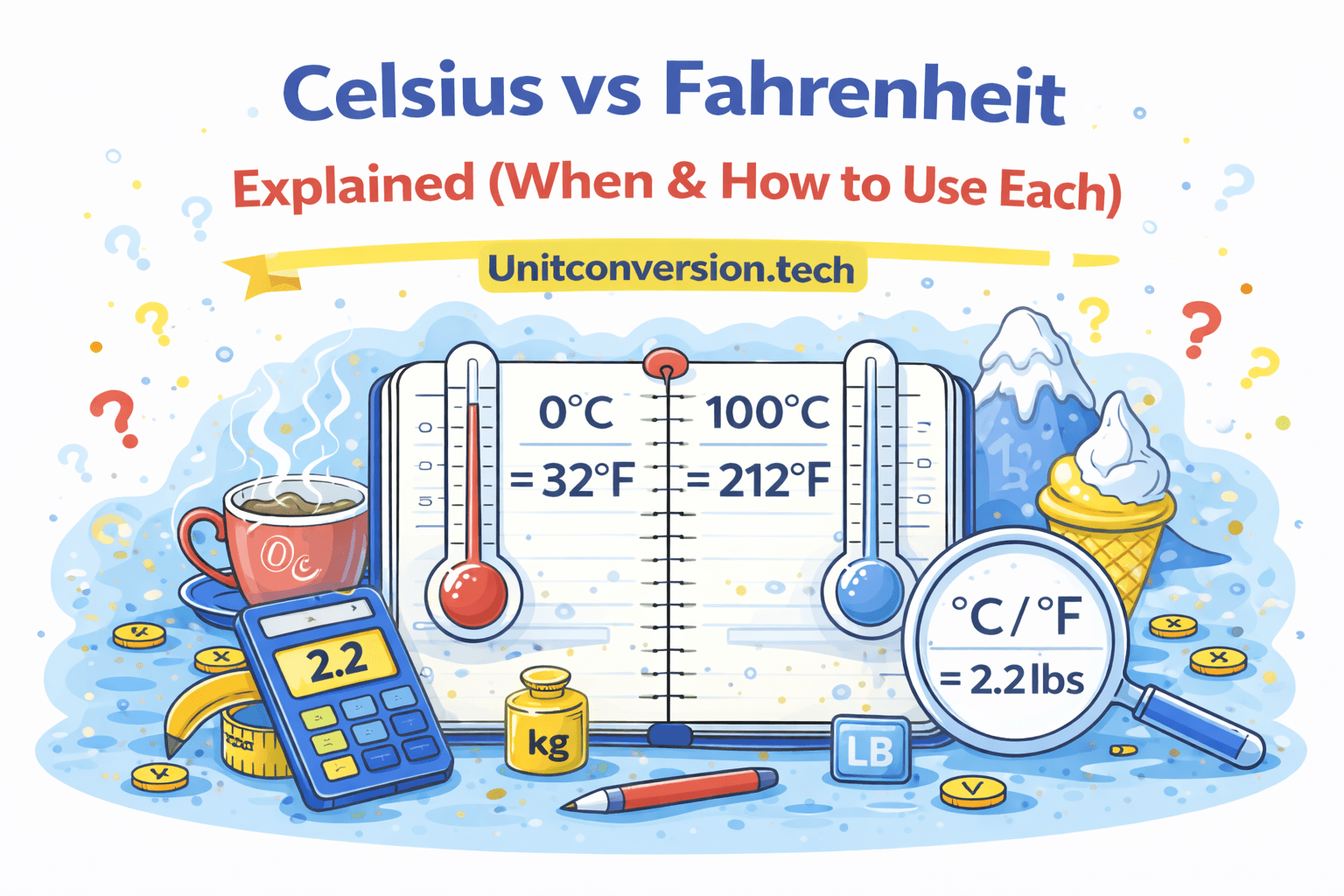
Celsius vs Fahrenheit are two widely used temperature scales, each applied in different regions and situations around the world. While both measure the same thing ”temperature”, their values and practical usage differ significantly depending on the measurement system being used (explained in our Imperial vs Metric System guide). The key difference lies in their reference points and where each scale is most commonly used.
🔥 Unique Angle: When Should You Use Each?
Instead of just learning formulas, here’s what actually matters:
- Celsius (°C)
Used in most countries worldwide.
Common in weather reports, science, and education. - Fahrenheit (°F)
Mainly used in the United States.
Common in daily weather and home temperature settings.
👉 Simple rule:
- Outside the US → Celsius
- Inside the US → Fahrenheit
This difference mainly exists because countries adopted different unit systems over time, which still affects how temperature is reported today.
📊 Freezing & Boiling Point Comparison
This makes the difference easy to remember:
- Water freezes at:
- 0°C
- 32°F
- Water boils at:
- 100°C
- 212°F
👉 Fahrenheit has a wider range between freezing and boiling. These reference points are standardized and used globally in science and education, especially within the SI unit-based temperature framework.
🔢 Conversion Formulas (Simple Version)
To convert between the two:
- Celsius to Fahrenheit: (°C × 9/5) + 32
- Fahrenheit to Celsius: (°F – 32) × 5/9
👉 Try instant temperature conversion instead of calculating manually at our free master temperature converter:
⚡ Quick Mental Trick (No Calculator)
👉 Double Celsius and add 30
Example:
- 20°C → (20 × 2) + 30 = 70°F (actual = 68°F)
👉 Good for quick estimates in daily life. Just remember that this method is approximate. Use exact formulas when precision matters.
📌 Common Temperature Examples
- Room temperature:
- ~20-22°C
- ~68-72°F
- Hot summer day:
- ~30°C
- ~86°F
- Cold weather:
- ~0°C
- ~32°F
These help you quickly understand both scales. Over time, remembering a few key reference points is often faster than doing conversions every time.
🧠 How to Quickly “Feel” the Difference
Instead of converting every number, you can learn to recognize temperature ranges:
- Below 10°C (50°F) → Cold
- 10-25°C (50-77°F) → Comfortable
- Above 30°C (86°F) → Hot
👉 This approach is useful when reading weather reports from different countries. It’s especially helpful when checking international weather reports or traveling abroad.
🌍 Real-Life Temperature Scenarios
Understanding temperature becomes easier when you relate it to daily life:
- Comfortable room:
👉 20-22°C ≈ 68-72°F - Warm summer day:
👉 30°C ≈ 86°F - Very hot weather:
👉 40°C ≈ 104°F - Cold winter day:
👉 0°C ≈ 32°F
These references help you instantly understand temperatures without converting every time.
⚠️ Common Mistake to Avoid
A common mistake is: Assuming Celsius and Fahrenheit increase at the same rate. They don’t:
- Celsius uses a simpler scale
- Fahrenheit uses smaller intervals
Misunderstanding this difference is one of the most common causes of temperature confusion. That’s why conversions require formulas to avoid confusion errors.
🎯 Why This Conversion Matters
Understanding Celsius vs Fahrenheit helps in:
- Traveling between countries
- Understanding global weather reports
- Cooking and baking
- Scientific and academic use (Guide on the role of unit conversion in science)
✅ Conclusion
Celsius and Fahrenheit measure the same thing but are used differently across the world. Once you understand when to use each scale and learn a simple conversion method, switching between them becomes intuitive. Over time, this becomes a practical unit conversion skill used in both daily life and global contexts.
🔗 Related Guides
📌 Key Takeaways
- Celsius and Fahrenheit are two different temperature scales used globally.
- Celsius is used in most countries, while Fahrenheit is mainly used in the United States.
- Water freezes at 0°C (32°F) and boils at 100°C (212°F).
- Use formulas like (°C × 9/5) + 32 for accurate conversion.
- A quick estimate can be done by doubling Celsius and adding 30.