
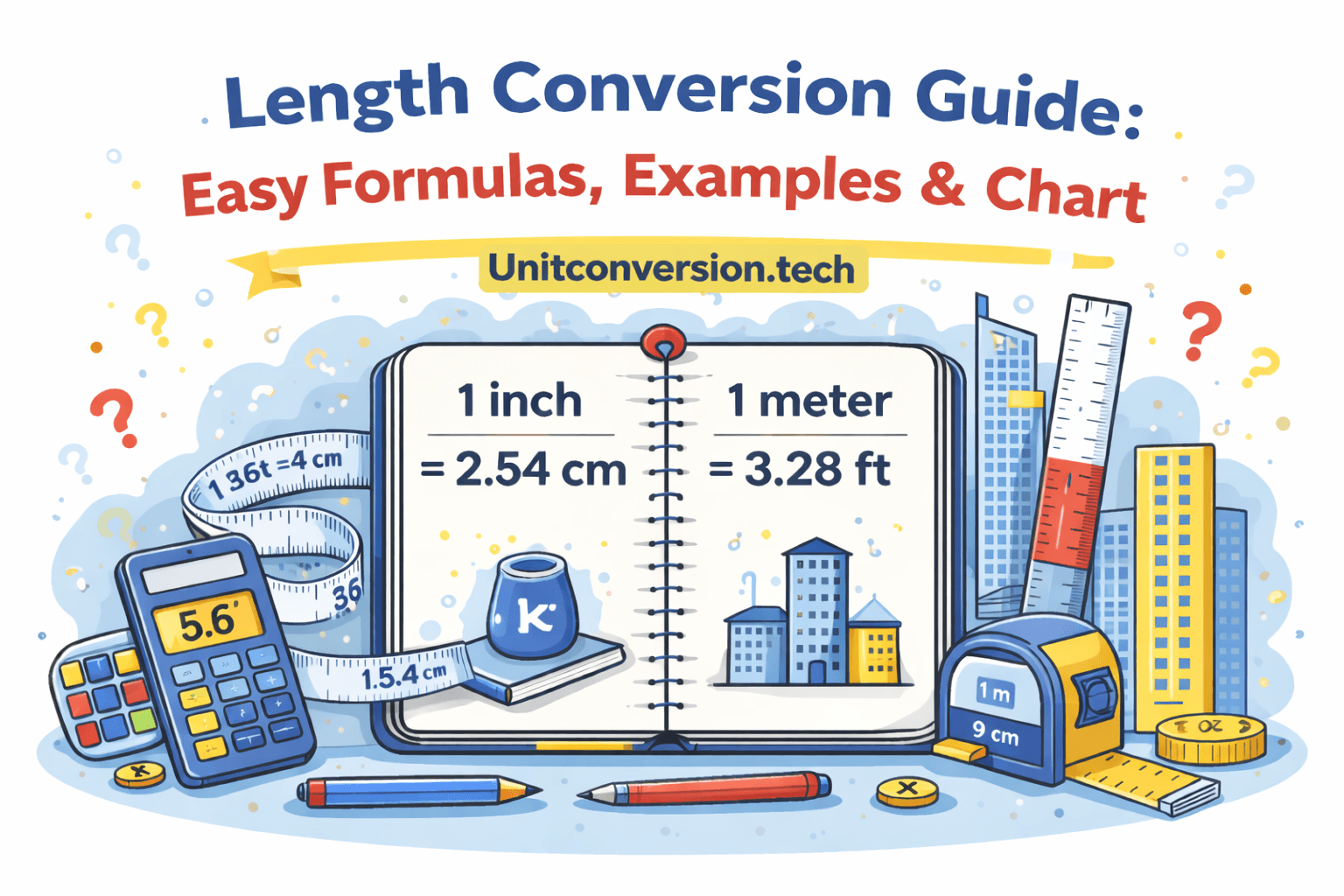
Length conversion is one of the most commonly used types of unit conversion in daily life. Whether you’re measuring distance, height, or dimensions, knowing how to convert between units like meters, feet, and inches is essential. In this guide, you’ll learn how length conversion works, along with simple formulas and examples to help you avoid mistakes.
What Is Length Conversion?
Length conversion is the process of converting a measurement from one unit to another. This process ensures consistency when working across different measurement systems. For example, converting meters to centimeters or miles to kilometers. Different regions use different systems of measurement, mainly:
- Metric system (meters, centimeters, kilometers)
- Imperial system (inches, feet, miles)
Understanding both systems helps you work with measurements easily. Knowing how systems differ improves accuracy in real-world calculations.
Common Units of Length
Here are some commonly used units:
Metric system:
- Millimeter (mm)
- Centimeter (cm)
- Meter (m)
- Kilometer (km)
Imperial system:
- Inch (in)
- Foot (ft)
- Yard (yd)
- Mile (mi)
These units are standardized under global measurement frameworks.
Length Conversion Formulas
Some basic conversion formulas include:
- 1 meter = 100 centimeters
- 1 kilometer = 1000 meters
- 1 inch = 2.54 centimeters
- 1 foot = 12 inches
- 1 mile = 1.609 kilometers
These formulas are useful for quick & accurate conversions both in daily calculations and scientific applications.
Examples of Length Conversion
Here are a few simple examples:
- Convert 5 meters to centimeters → 5 × 100 = 500 cm
- Convert 10 inches to centimeters → 10 × 2.54 = 25.4 cm
- Convert 2 kilometers to meters → 2 × 1000 = 2000 m
Practicing these examples makes the process easier to understand. Use our free length converter to instantly convert length units.
Common Length Conversion Mistakes
Many people make small mistakes while converting units. Some common ones include:
- Mixing up units like inches and centimeters
- Forgetting to multiply or divide correctly
- Using the wrong conversion factor
- Confusing similar-sounding units (e.g., meter vs millimeter)
Avoiding these mistakes can improve accuracy. Many of these errors also occur due to improper rounding or assumptions.
Quick Length Conversion Tips
Here are some simple tips to make conversions easier:
- Remember key values like 1 inch = 2.54 cm
- Use the metric system when possible (easier to convert)
- Double-check your calculations
- Use online tools or calculators when needed
These tips can save time and reduce errors. They are especially helpful when working in fast-paced environments like travel or field work.
Real-Life Applications of Length Conversion
Length conversion is used in many real-world situations:
- Construction and engineering
- Travel and navigation
- Education and exams
- Shopping (furniture, clothing sizes, etc.)
Understanding conversions helps you make better decisions in daily life.
Quick Reference Table
Here is a simple reference:
- 1 m = 100 cm
- 1 km = 1000 m
- 1 in = 2.54 cm
- 1 ft = 0.3048 m
- 1 mile = 1.609 km
You can use this as a quick guide whenever needed. However, for precise values, always verify using accurate tools.
Why Length Conversion Matters
Length conversion is important in many situations, such as:
- Construction and engineering
- Travel and navigation
- Education and exams
- Everyday measurements
Using the correct units helps avoid errors and ensures accuracy.
Conclusion
Length conversion is a basic but important conversion skill. Once you understand the units and formulas, it becomes easy to convert between different measurements. Understanding these measurement systems makes it easier to work with global standards. Use this guide whenever you need quick and accurate length conversions.
🔗 Related Guides
📌 Key Takeaways
- Length conversion is the process of changing a measurement from one unit to another, such as meters to feet or kilometers to miles.
- The metric system uses a base-10 structure, making conversions simple and consistent.
- The imperial system uses units like inches, feet, and miles with fixed conversion values.
- Common conversions include 1 inch = 2.54 cm, 1 foot = 12 inches, and 1 kilometer = 1000 meters.
- Understanding basic formulas helps you perform quick and accurate conversions without confusion.
- Practicing real-world examples improves your ability to convert units correctly.
- Length conversion is widely used in construction, travel, education, and everyday measurements.