
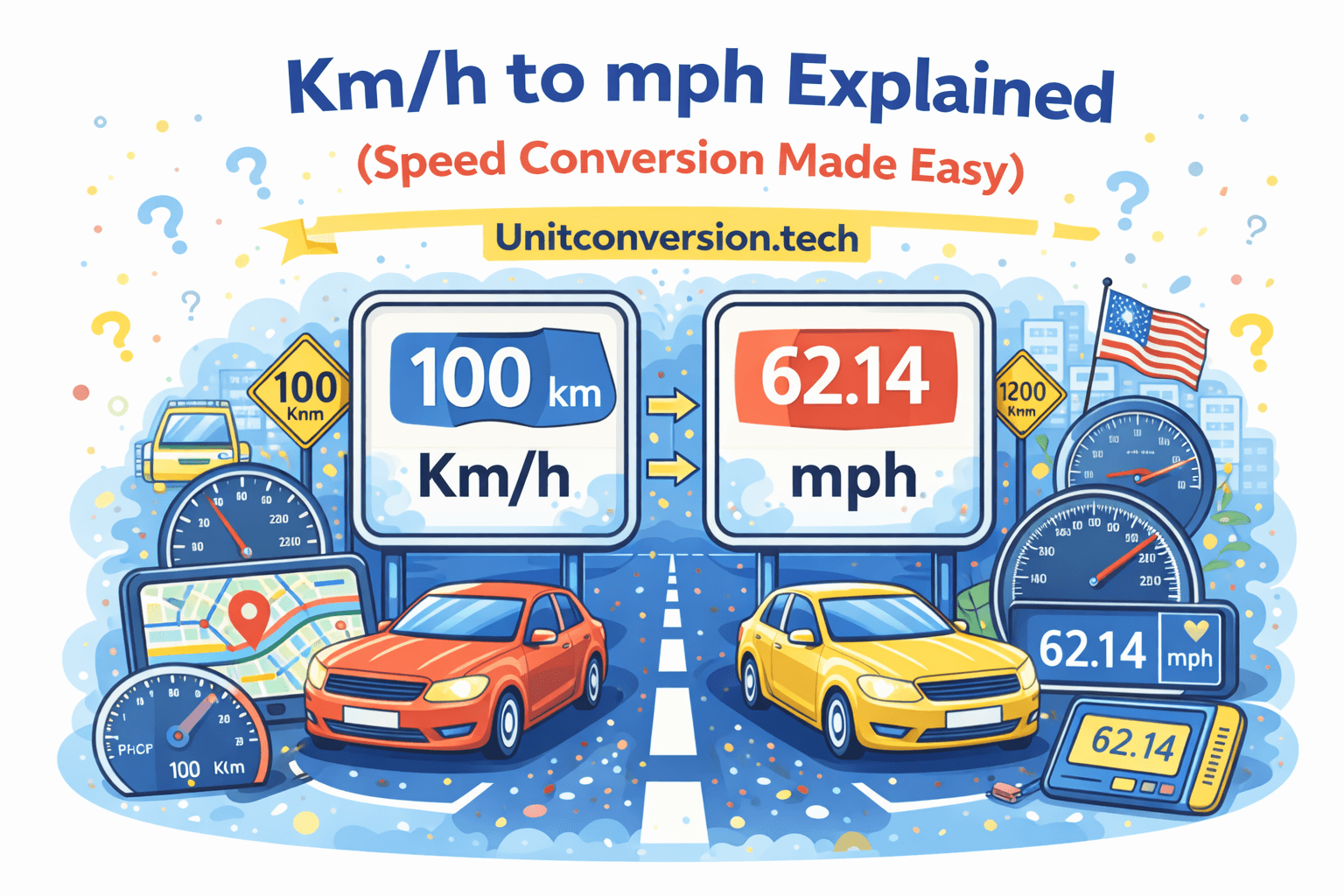
Km/h to mph is one of the most useful conversions when driving or traveling internationally. If you’ve ever looked at a speed limit sign in another country and felt unsure, this is exactly the conversion you need. Instead of memorizing formulas, this guide will help you understand speed intuitively. If you’re new to conversions, it helps to first understand how different units relate to each other across systems.
🚦 The Real Difference (Think Like a Driver)
- km/h (kilometers per hour) → Used in most countries (India, Europe)
- mph (miles per hour) → Used mainly in the US and UK
👉 The key idea:
- 1 km/h ≈ 0.62 mph
- 1 mph ≈ 1.6 km/h
👉 These differences exist because countries follow different measurement systems. But don’t worry, you won’t need to remember both. These relationships come from standardized measurement systems used globally
🧠 Unique Angle: “Speed Feel” Method
Instead of numbers, think in driving experience:
- 60 km/h → normal city driving
- 100 km/h → highway speed
Now convert mentally:
- 60 km/h ≈ 37 mph
- 100 km/h ≈ 62 mph
👉 So, ”mph” numbers are always smaller than ”km/h”. This difference becomes clearer when you compare how distance units themselves vary in size. Check the real number difference using our free mph to km/h conversion calculator.
⚡ The Easiest Trick (No Formula Needed)
👉 To convert km/h → mph: Multiply by 0.6 (or divide by 1.6)
Quick Examples:
- 50 km/h → 30 mph
- 80 km/h → 50 mph
- 120 km/h → 75 mph
👉 Not perfect, but very close for real-world use.
🌍 Why This Conversion Confuses People
Here’s the catch:
- Numbers in km/h look bigger
- Numbers in mph look smaller
👉 But speed is the same.
- 100 km/h ≠ faster than 60 mph
- They’re almost equal
This type of confusion is common in many unit conversions, especially when switching between systems.
🛣️ Real-World Speed References
Use these as mental anchors:
- City traffic:
- 40-60 km/h → 25-37 mph
- Highway driving:
- 80-120 km/h → 50-75 mph
- Fast highway:
- 140 km/h → ~87 mph
👉 These ranges help you “feel” the speed instantly. These comparisons are especially useful when traveling between countries with different speed units.
⚠️ Common Mistake
👉 Thinking 100 km/h = 100 mph ❌
This can lead to dangerous misunderstandings while driving. Always remember km/h values are higher than mph.
🎯 Why This Matters
You’ll use this in:
- Driving abroad
- Understanding speed limits
- Watching international car reviews
- GPS and navigation systems
Small conversion errors can have real-world consequences, especially when precision matters.
🔄 Bonus: Reverse Thinking (mph → km/h)
👉 Multiply by 1.6
- 60 mph → 96 km/h
- 70 mph → 112 km/h
✅ Conclusion
Km/h and mph measure the same speed but use different scales. Once you understand that mph values are smaller and use simple tricks like multiplying by 0.6, converting between them becomes quick and practical skill especially while driving.
🔗 Related Guides
📌 Key Takeaways
- 1 km/h is approximately equal to 0.62 mph.
- Multiply km/h by 0.6 for quick conversion to mph.
- mph values are smaller than km/h for the same speed.
- This conversion is important for driving and travel.
- Multiply mph by 1.6 to convert back to km/h.